
Know and show your facility is safe, efficient, and in compliance.
LAMPS, by HC Info, is an award-winning cloud solution for water quality management plans, data benchmarking, and approved training.
Know and show your facility is safe, efficient, and in compliance.
LAMPS, by HC Info, is an award-winning cloud solution for water quality management plans, data benchmarking, and approved training.
Without safe water, a building cannot be truly healthy, smart, or resilient.
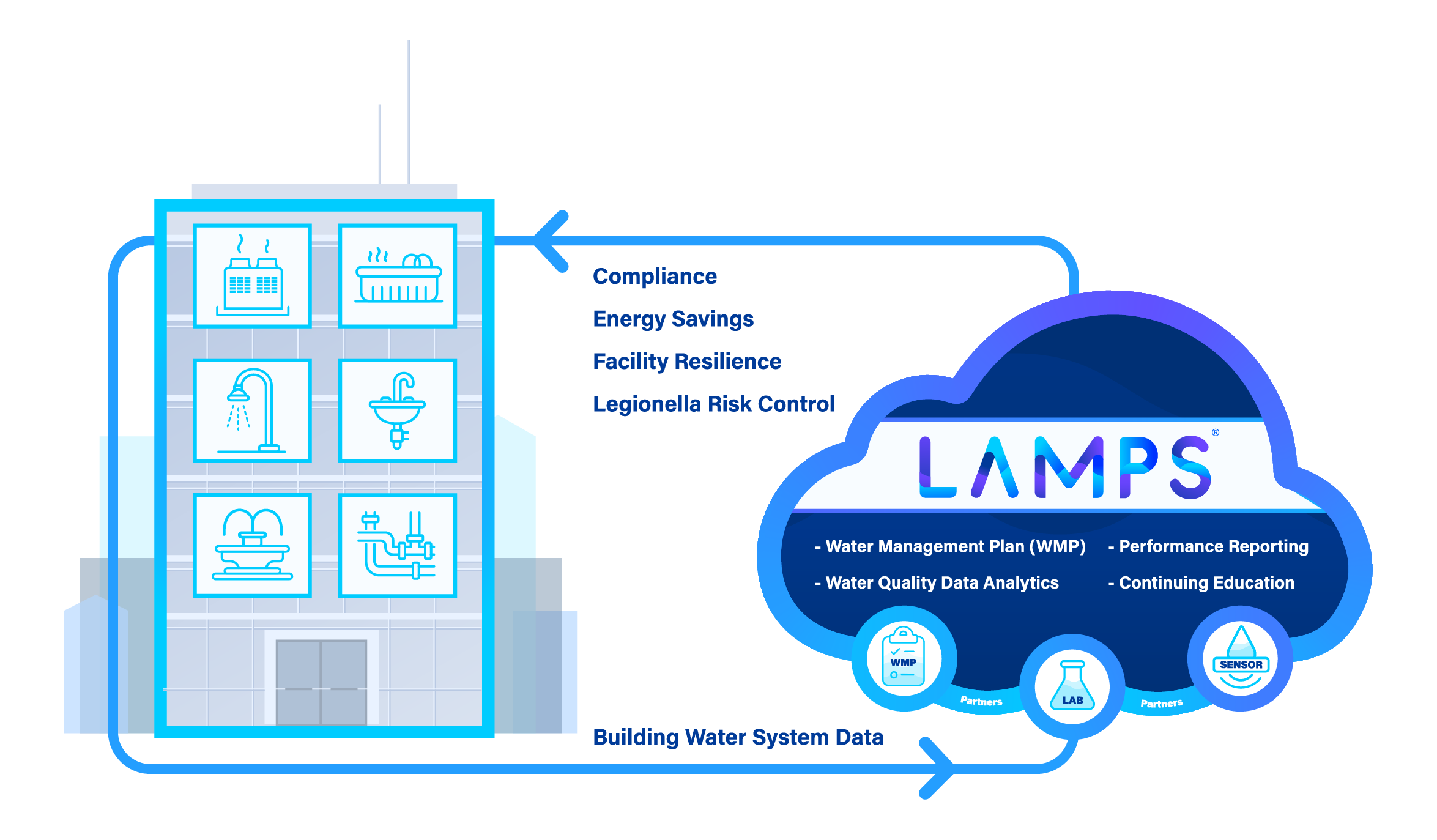
We understand you want to promote wellness for the people in your buildings but your hands and budget are full.
Let LAMPS make your water quality management defensible, smart, and sustainable.
Sleep well knowing you are mitigating risk, doing the right thing for your building occupants, and staying in compliance – without overspending.
LAMPS provides the solutions you need in a single, easy-to-use cloud application.
Solutions

Get ASSE 12080 Legionella Specialist and EOCP BWS Operator certifications. Enhance your credentials. Train your team. Our approved online courses are available 24/7–on your schedule, at your pace.
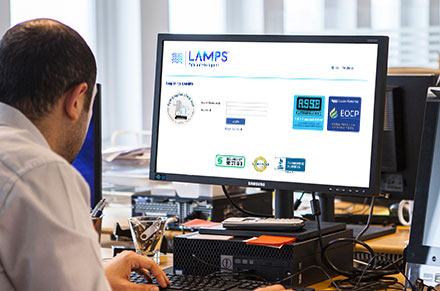

Monitor water quality with IoT sensor technologies. Automate WMP documentation and reporting. Get alerts before problems occur. Shorten response times. Reduce energy consumption.
Leading Facilities and Health Departments Trust LAMPS





LAMPS Makes Your Water Management…

Defensible
Your WMP is more credible with unbiased content on a platform shared with 15,000 users and 10,000 buildings that include large institutions. LAMPS reports help you show compliance and performance.

Sustainable
LAMPS helps you successfully perform a WMP for facility resilience by giving you easy customizing and updating, notifications to keep you on track, built in training for quick answers, and automation.

Smart
Proprietary LAMPS data analytics enable you to pinpoint and solve problems quickly. System monitoring and alerts help you predict and avoid problems altogether. Step-by-step roadmaps help you avoid mistakes.
What LAMPS Users Are Saying

“We have found the WMPs developed by HC Info to meet all the requirements of both the insured and the insurance company. The plans are cost competitive, comprehensive, and meet the regulatory as well as the user requirements.”
— Russel Nassof, Esq., Attorney, Executive Vice President, RiskNomics

“The LAMPS software was a godsend
for us.”
— Jonathan Lewis, Klickitat Valley Health

“Exactly what is needed. I will sure be recommending that industrial hygienists, water treaters and others getting into sampling for Legionella join your LAMPS program and take the courses!!”
— Diane Miskowski, MPH, Legionella Subject Matter Expert, EMSL Analytical, Inc.

“LAMPS is an incredibly valuable resource for all of our healthcare facilities. The platform is easy to learn and use and allows teams to organize all pertinent information in one centralized place. The training materials are in depth, helpful, and easy to find and the LAMPS customer service is exemplary – I always receive an immediate, friendly, and helpful response to questions or issues. LAMPS is a program that I highly recommend to all similar facilities!”
— Heather Wilson, Senior Operations Analyst, CBRE Healthcare

“HC Info’s LAMPS program is a great way for engineers to get a better understanding of how to mitigate Legionella growth in a plumbing system. The sessions had content that were good for entry level engineers all the way up to experienced engineers. I came away with a few different ideas of how I’d modify my design approach to further mitigate Legionella risk. Thanks again for being willing to work with our ASPE Chapter to get this much needed training to our members!”
— Christoph Lohr, PE, CPD, LEED AP BD+C, ASSE 6020
Join the LAMPS Community
- Water treatment companies, engineering firms, industrial hygienists, and consultants choose LAMPS for their clients’ water management plans.
- Health departments trust LAMPS for outbreak response and prevention training.
- Thousands of facility managers, infection preventionists, and safety personnel use LAMPS for the people who trust them to provide safe and healthy water in their buildings.
- Leading laboratories and sensor makers integrate with LAMPS to provide seamless data flow, analytics, and documentation for our mutual customers.

LAMPS FAQs
What is LAMPS?
LAMPS is an award-winning cloud solution for water management plans, water data analytics, and training. Facilities use LAMPS to protect people in their buildings from illness, reduce legal risk, and comply with standards and regulations.
What facilities is LAMPS designed for?
LAMPS offers tailored programs for seven building types:
-
- Hospitals
- Nursing Homes
- Apartments & Condo Buildings
- Hotels, Resorts, & Casinos
- Industrial Facilities
- Offices & Commercial Buildings
- Schools & Universities
Learn more about solutions for your facility type.
Do I need a water management plan?
It is important to manage any water system type that is prone to Legionella growth and transmission. This includes (but is not limited to) domestic/potable plumbing systems, decorative fountains, cooling towers, and whirlpool spas. See page 3 of the CDC guide to developing a water management program.
Can I manage multiple buildings with one plan?
Per the ASHRAE 188/514 framework, buildings located on different sites/properties should have separate water management plans (WMPs) even if the buildings are similar in size and type and located in the same city. An exception could be buildings located on properties that are adjacent or across the street, provided they are managed by the same personnel and the flow diagrams make sense.
However, only one WMP is needed for a campus with several buildings – even 100+ buildings – as long as they are managed by the same personnel.
Which version of LAMPS should I choose?
If you need a water management plan to comply with ASHRAE 188, ASHRAE 514, other standards, CMS, or regulations, then select LAMPS Plan or LAMPS Complete. Select LAMPS Complete if you need to comply with AAMI ST108, will be testing temperature, disinfectant, Legionella, or other water quality parameters. If you do not need a WMP and just want to manage data for water quality monitoring, select LAMPS Benchmark.
Does LAMPS have functionality for monitoring multiple properties?
Yes. LAMPS has a portfolio report for comparing multiple properties on several metrics.
Which specific standards does LAMPS help me comply with?
ASHRAE Standards 188 and 514, AAMI ST108, ASSE/IAPMO/ANSI Standard 12080, and others.
Can LAMPS generate a 'defensible' report if an inspector visits unexpectedly?
Yes. LAMPS has a Compliance report, water quality summary report, and PDF download of the entire plan.
Can LAMPS integrate with my building's existing IoT sensors or BMS (Building Management System)?
Yes. To talk with an unbiased expert about it, ask us how.
Why do I need a WMP instead of a spreadsheet or policy we currently have?
Truly healthy buildings need a comprehensive water management program, rather than a static document, to control Legionella and other pathogens in the building. See related articles:
How do I purchase a water management program?
Our e-commerce is all automated. You can purchase any LAMPS product directly from the LAMPS purchase page.
How does LAMPS work? Can I get a demo?
Our team is happy to meet with you for a short demonstration of the LAMPS software. Request a DEMO.
Is our data secure?
Yes. LAMPS has been scrutinized by many large, security-conscious organizations – prestigious hospital systems, big tech firms, large hotels and casinos, federal and state government entities – that are now customers trusting LAMPS with their data. If you have questions about our security features, please ask us about it.
Do you provide setup assistance?
We provide software support. Our implementation partners provide setup services.
Can we migrate our existing program to LAMPS?
Yes. You can upload your flow diagrams to LAMPS, upload water quality data via a spreadsheet, and enter other data manually. You can also upload your prior WMP document to the LAMPS documentation section, to refer back to.
What training does our team need?
It depends on each team member’s role. LAMPS offers 7 free courses for all members of the WMP team, and others at a discount. You can assign courses based each team member’s responsibilities. ASSE 12080 Legionella Specialist certification has become the standard for anyone who provides Legionella-related services or has a key role in managing water systems for Legionella control.
What is water quality benchmarking?
Please click to see an overview of LAMPS Water Quality Benchmarking.
Can I set different permission levels (e.g., View-Only for executives, Edit for technicians)?
Yes. When adding users to a WMP you can select one of three permission levels, ranging from read only access to full configuration.